Non Rising Gate Valve
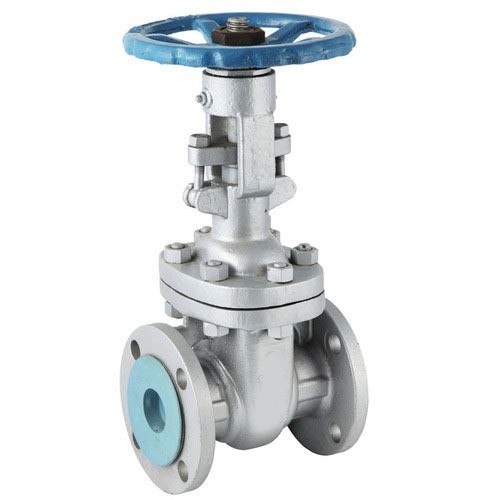
Product Introduction Product introductionNon rising gate valve refers to the outer stem, also known as non rising sluice valve or blind stem wedge gate valve. In a non rising gate valve, the valve stem will turn to open and close the gate, but the valve stem will not move up or down as it turns. Whe
Product Introduction
Product introduction
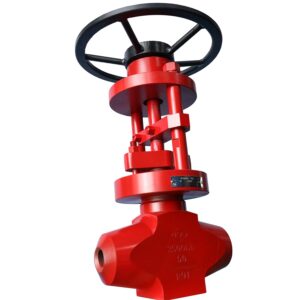
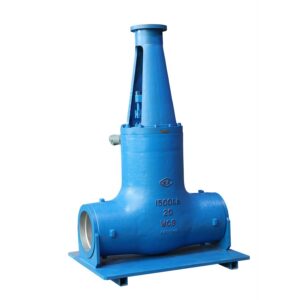
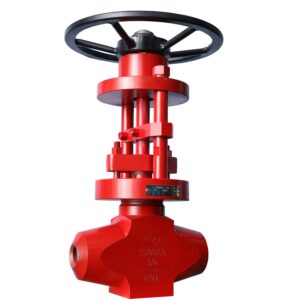
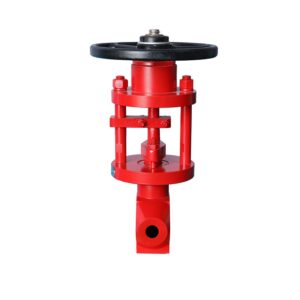
Non rising gate valve refers to the outer stem, also known as non rising sluice valve or blind stem wedge gate valve. In a non rising gate valve, the valve stem will turn to open and close the gate, but the valve stem will not move up or down as it turns. When the valve stem turns, it enters or moves out of the valve, which also moves the gate to open or seal the valve.
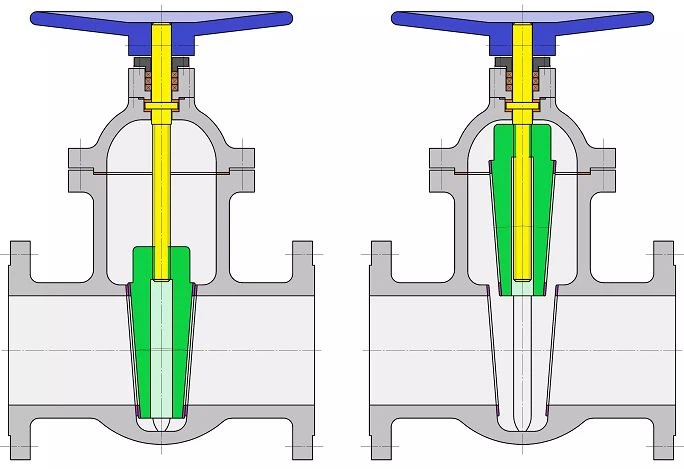
Advantages and disadvantages of non-rising stem gate valve:
Non-rising stem gate valves take up less space, and rising stem gate valves require more space. The non-rising structure is designed so that when the handle is rotated as far as possible to the left, the valve stem of the gate valve is fully opened, and When the handle rotates to the right to the end, the gate valve stem is fully closed.
In both cases, the handle is flush with the pipe because a mechanism within the pipe opens and closes the valve without raising the stem.
Another advantage of non-rising stem gate valves is that they are easier to padlock. Non-rising stem gate valves are typically only used for cleaning liquids and gases.
The stem nut of the non-rising stem gate valve is in the valve body and is in direct contact with the medium. When the gate is opened or closed, it is through the rotation of the valve stem. The advantage of this structure is that the height of the gate valve remains the same, so the installation requires a small room, which is suitable for large gate valves or valves with limited installation space. Non-rising stem gate valves are usually equipped with an open/close indicator. But it also has some shortcomings, such as the valve stem thread will not be lubricated, and it will also be directly etched by the medium, which is easy to damage.
What is the difference between a rising stem gate valve and a non-rising stem gate valve?
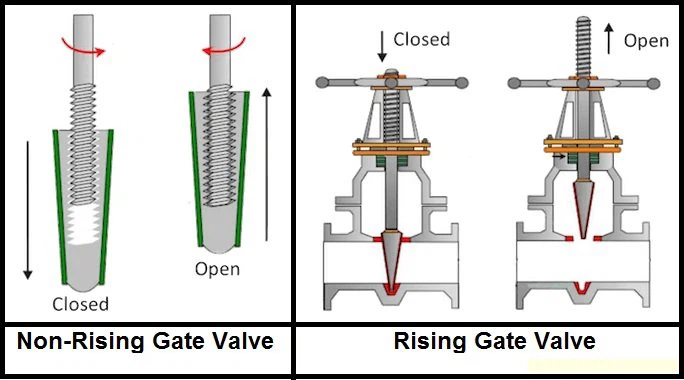
Appearance: It can be seen from the appearance whether the rising stem gate valve is closed or open. The lead screw can be seen, but not the non-rising stem gate valve.
The lifting screw of the rising rod flange gate valve is exposed, and the nut is fixed on the handwheel (not rotating axially). The lifting screw of the non-rising stem flange gate valve only rotates and does not move up and down.
Product Overview - XURI Valve
Non-rising stem gate valve designed for on-off isolation in pipeline systems. Available in carbon steel, stainless steel, and alloy materials. Class 150-2500, sizes 2"-48". API 600 certified. Suitable for oil & gas, petrochemical, power generation, and water treatment applications.
ISO 9001 certified gate valve manufacturer, factory direct pricing with fast global delivery. API 600 compliant, OEM/ODM available for custom specifications.
Available Configurations
- Sizes: DN15 - DN600 (1/2" - 24")
- Pressure Ratings: Class 150 - Class 2500 (PN16 - PN420)
- Body Materials: WCB, WCC, LCB, LCC, WC6, WC9, C5, C12A, CF8, CF8M, CF3, CF3M, Duplex 2205/2507
- End Connections: Flanged (RF, RTJ), Butt Weld, Socket Weld, Threaded (NPT)
- Operation: Manual (Rising Stem, Non-rising Stem), Gearbox, Pneumatic, Electric
- Seat Design: Flexible Wedge, Solid Wedge, Split Wedge, Double Disc Parallel Slide
- Trim Materials: 13Cr, STL, Monel, Inconel, Hastelloy
- Standards: API 600, API 602, ASME B16.34, BS 1414, NACE MR0175
Specifications
| 压力等级 (Pressure Rating) | PN16 ~ PN420 / Class 150 ~ 2500 |
|---|---|
| 阀体材质 (Body Material) | Carbon & Alloy Steel (WCB, WC6, WC9, A105) |
| 适用介质 (Applicable Media) | Water, Oil, Gas, Steam |
| 连接方式 (End Connection) | Flanged / Threaded |
| 驱动方式 (Operation Type) | Manual / Automatic |
| 应用领域 (Applications) | Petroleum, Chemical, Power |