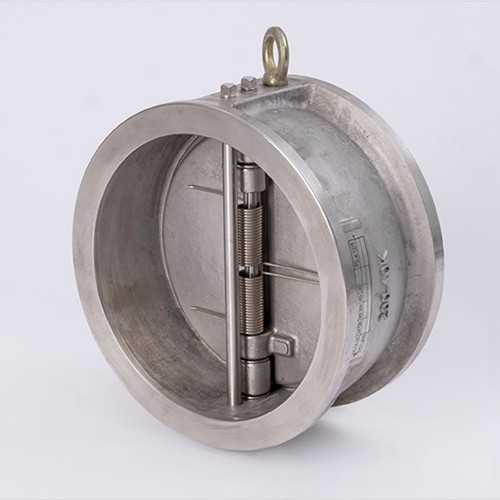
Metal Seated Check Valve
Model: XURI-METALSEATEDC
| Pressure Rating | Class 150# ~ 2500# / PN10 ~ PN420 |
| Materials | Carbon Steel / Stainless Steel / Alloy Steel |
| Connection Type | Flanged / Threaded / Butt Weld / Socket Weld |
| Temperature Range | -196°C ~ 800°C (depending on material and design) |
| Standards | API / ANSI / ASME / DIN / BS |
Description
Metal seat check valve is also called hard seal check valve. Both sides of the seal pair are made of metal materials or other harder materials, which are called “hard seals”. This seal has poor sealing performance, but high temperature resistance, wear resistance, and good mechanical properties.
Features:
1. The machining accuracy and technology are difficult, and it is generally used in high pressure, usually above 35MPa.n2. The hard seal is precision machined with the valve seat material to ensure the matching accuracy with the valve core (ball), generally stainless steel and copper.n3. The hard seal has high high temperature resistance and good fire resistance. Under high temperature, the hard seal medium will not leak.n4. Hard seals can generally do high pressure and have better corrosion resistance.n5. Compared with soft-sealed valves, metal seat check valves with the same diameter and pressure are more expensiven6. Chrome stainless steel. Chromium stainless steel has good corrosion resistance and is usually used for water, steam and oil, and the temperature does not exceed 450 degrees. Commonly used grades are 2Cr13 and 1Cr13.n7. Stellite alloy. Stellite carbide is corrosion resistant. The comprehensive properties of erosion resistance and scratch resistance are very good. It is suitable for valves of various purposes and various media with a temperature of -268 to +650 degrees, especially strong corrosive media. It is a kind of One of the ideal sealing surface materials. (Recommended by valve manufacturers: China Guowei Valve Manufacturing Co., Ltd.) Stellite alloys are mostly surfacing due to their high prices.n8. Nickel-based alloys. Nickel-based alloys are another important material in the field of corrosion resistance. There are three commonly used sealing surface materials: Monel, Hastelloy B and Hastelloy C. Monel is the main material that resists hydrofluoric acid corrosion, and is suitable for alkali, salt, food, and air-free acid solvent media at temperatures of -240 to +482 degrees. Hastelloy B and Hastelloy C are the most resistant to general corrosion among valve sealing surface materials, and are suitable for corrosive mineral acid, sulfuric acid, phosphoric acid, wet HCI gas, and strong oxidizing medium at a temperature of 371 degrees (hardness 14RC); At the same time, it is suitable for chloric acid-free solution and strong oxidizing medium with a temperature of 538 degrees (23RC).n9. Iron-based alloys. Iron-based alloy is a newly developed sealing surface material in my country. Its wear resistance and scratch resistance are better than 2Cr13, and it has certain corrosion resistance, which can replace 2Cr13. It is suitable for non-corrosive media with temperature less than or equal to 450 degrees. Commonly used grades are WF311, WF312 iron-based powder.
Need Technical Specifications or a Quote?
Our engineering team can provide detailed drawings, test reports, and customized solutions.
Get a Quote →